Rural Health Transformation Program
The Rural Health Transformation Program (RHTP) is a federal initiative created by the 2025 federal reconciliation bill (H.R.1). The program, administered by CMS, allocates $50 billion to states nationwide from federal fiscal years 2026 through 2030 – $10 billion annually.
Over the course of five years, states will invest in rural initiatives targeted at sustainable access, workforce development, tech innovation, innovative care, and healthy living.

Health Centers are Key to Transformation
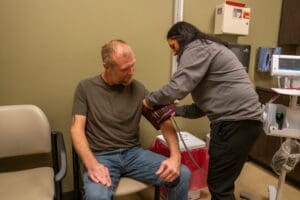
In North Dakota and South Dakota combined, health centers serve 1 in 11 residents across 50 communities.
This reach, combined with a comprehensive, integrated model of primary care, makes health centers uniquely positioned to transform rural health in our states.
North Dakota RHTP Information
CMS awarded North Dakota $198.9M for FY26. The state is investing in four focus areas:
- Strengthen and stabilize rural health workforce;
- Make North Dakota healthy again;
- Bring high-quality care closer to home; and
- Connect tech, data, and providers for a stronger ND.
Visit the ND RHTP Webpage to find funding opportunities, project details, and more.
You can also sign up for RHTP email updates from NDHHS.
Rural Health Transformation Program: Deep Dive for Health Centers
North Dakota Webinar
January 24, 2026
South Dakota RHTP Information
CMS awarded South Dakota $189.4M for FY26. The state is leveraging RHTP dollars to advance goals across four focus areas:
- Connect technology and data,
- Advance the rural workforce,
- Keep health care local and strong, and
- Transform systems for sustainability.
Visit the SD RHTP Webpage to find funding opportunities, initiative summaries, recorded webinars, and more. Not finding what you need? Contact the CHAD team, and we will help you navigate to the appropriate state contact or resource.
Rural Health Transformation Program: Deep Dive for Health Centers
South Dakota Webinar
January 26, 2026
Health Center Assistance
CHAD is here to support health centers – whether individually or as a collective network – as they engage with RHTP initiatives and applications. We support member health center organizations across the Dakotas with resources, peer learning, and technical assistance across a variety of areas. This includes clinical quality, workforce development, technology, data management and analytics, finance, outreach and enabling, marketing, emergency preparedness, and more.